
Global Regulatory Research and Standards Procurement Support Experience
My work in regulatory research and standards procurement support has involved researching requirements across many jurisdictions and supporting access to standards issued by organizations around the world.
Based on my work records to date, this experience covers:
- 148 countries in regulatory research
- 25 countries in standards procurement support
The following visualization provides an overview of that geographic experience.
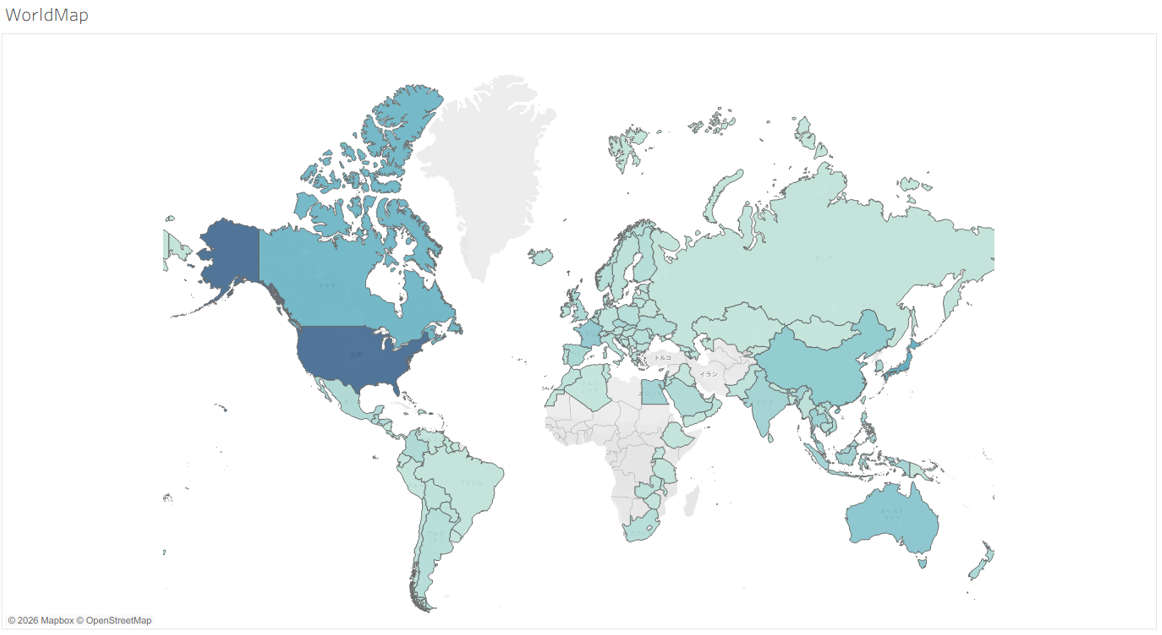
Visualization created in Tableau based on my work records to date.
Regulatory Research Across Multiple Jurisdictions
Regulatory research is rarely limited to finding a single law, regulation, or official website.
Depending on the country and subject, the work may involve identifying the relevant authority, locating primary sources, checking the status of documents, comparing requirements, and organizing the information so that it can be reviewed and used efficiently.
Working across many jurisdictions has also reinforced the importance of distinguishing between:
- official and secondary sources
- current and superseded information
- mandatory requirements and reference information
- national requirements and international standards
- confirmed facts and points requiring further verification
The research process therefore extends beyond information retrieval. It requires verification and structured organization of the results.
Standards Procurement Support Is More Than Purchasing a Document
My experience in standards procurement support has involved considerably more than assisting with the purchase of a document from an online store.
Depending on the country and standards organization, I have supported activities such as:
- confirming whether a standard can be purchased from outside the issuing country
- verifying purchasing conditions
- identifying the appropriate edition or document
- checking whether a national standard is identical to or based on an ISO or IEC standard
- communicating with standards organizations and other relevant organizations
- confirming purchaser or end-user requirements where necessary
- handling international payment arrangements
- investigating additional fees or payment-related issues
These differences mean that a purchasing process that works for one organization may not apply to another.
In practice, standards procurement support often requires research and verification before the purchase itself can proceed.
An International Payment Example
One practical example involved an international transfer for a standards-related purchase.
After the original payment had been made, an additional bank fee was requested.
Rather than immediately arranging another transfer, I reviewed the payment conditions and the circumstances surrounding the additional charge and communicated about the issue.
As a result, no additional transfer was ultimately required.
This was a relatively small issue, but it illustrates why international standards procurement can require more than payment processing alone.
The process may involve understanding the purchasing conditions, checking what has already been paid, communicating with the relevant organization, and determining the appropriate next action.
From Research to Structured Access
These experiences have led me to view regulatory research and standards procurement support as connected activities rather than isolated tasks.
A typical flow can be expressed as:
Research
→ Verification
→ Procurement Support
→ Structured Access
Before acquiring a document, it may first be necessary to determine which document is actually required.
Before relying on that document, its status, relationship to international standards, purchasing conditions, and permitted use may also need to be verified.
After acquisition, the information often needs to be organized so that it can be located, compared, and reused efficiently.
Toward a More Systematic Approach
Going forward, I am interested in developing a more systematic approach to international standards access and procurement support.
The objective is not simply to make purchasing faster.
It is to combine research, verification, communication, procurement support, and information structuring into a workflow that makes international technical information easier to access and manage.
This also connects with a broader theme in my work at KINOTO RESEARCH:
Question or operational challenge
→ Research
→ Information structuring
→ Requirement definition
→ Practical tool or reusable knowledge
My experience in regulatory research and standards procurement support is one of the foundations for continuing to develop this approach.
This Research Note summarizes general professional experience. It does not include client-specific information, confidential project details, or the contents of purchased standards.